


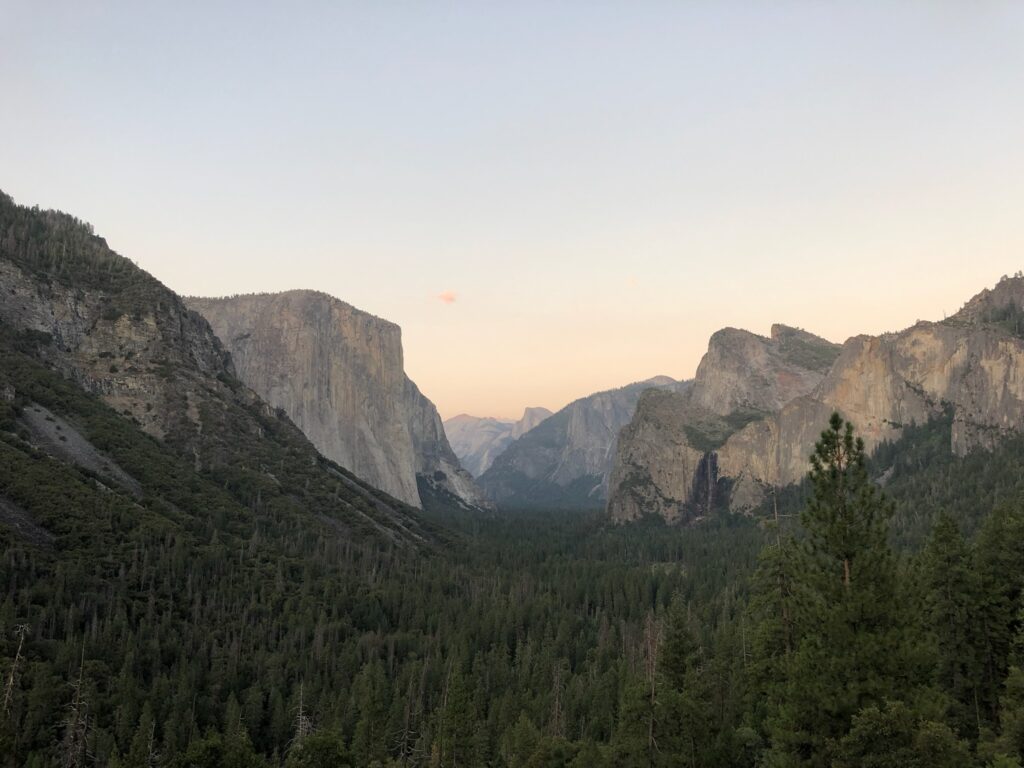
There’s something special about a road trip that links together places you’ve dreamed of seeing with stretches of wide-open highway in between. This past summer, we set out from Utah with a plan to explore some of the West’s most iconic landscapes: the salt flats, Lake Tahoe, Yosemite National Park, and finally, the towering sequoias of California. The journey was as much about the drive as the destinations, a patchwork of small moments, unexpected stops, and unforgettable sights.
Utah to the Salt Flats: First Night on the Road
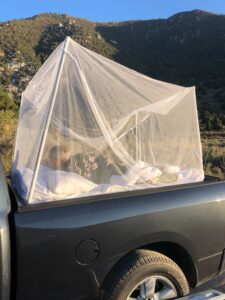
Leaving Utah in the afternoon, the car was packed with camping gear, snacks, and that road-trip energy you only feel when you know you’re headed somewhere big. If you know me, I love to sleep in the back of a truck under the stars. So I jimmy rigged a blow up mattress that would be able to handle some side pvc pipes, where I would drap a bug net over top of us to sleep. Genius, I know.
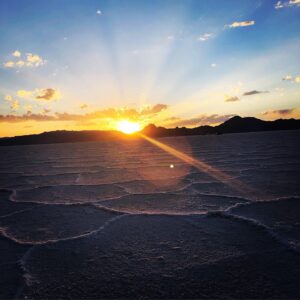 My first stop was just outside the Bonneville Salt Flats, where I set up camp for the night. The horizon stretched endlessly, the white expanse glowing under the setting sun. There’s a quiet out there that you don’t find many places — just the crunch of salt underfoot and a night sky so clear you could trace the Milky Way with your finger. You’re not allowed to camp on the flats themselves and we discovered why. About an hour after sunset our truck started to sink, the salt gets soggy and we learned many a vehicles have to be towed out. Luckily we saw the wheels lower then when we started before we fell asleep so we packed up and headed to an acutal campsite for the night on paved land.
A Day at Lake Tahoe
The next morning, I drove west and made my way into the mountains of Nevada and California. By midday, I had reached Lake Tahoe. After hours on the road, diving into that cold, clear blue water felt like heaven. The shoreline was dotted with people lounging, paddle boarding, and swimming, but the lake is so massive that it still felt peaceful. I spent the day swimming, drying off on sun-warmed rocks, and just letting the mountain air do its magic before heading south for the night.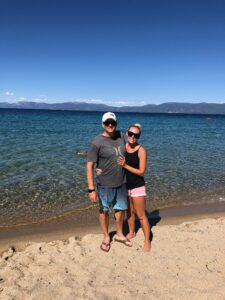
The Eastern Gate of Yosemite
By evening, I had found a campsite just outside the eastern entrance of Yosemite along Tioga Pass. Falling asleep with the crisp mountain air and the anticipation of Yosemite waiting just up the road was one of those moments where the journey feels as exciting as the de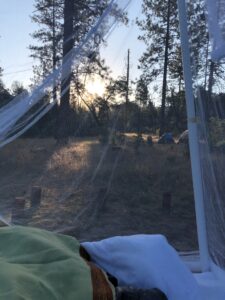 stination.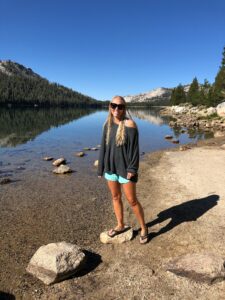
Into Yosemite: From the High Country to the Valley
At sunrise, I packed up camp and drove into Yosemite from the east. The high country was my first glimpse of the park — alpine lakes shimmering in the early light, meadows stretching out like green carpets, granite peaks standing tall around every bend. I stopped at a few of the lakes near the top of the pass, where the water was so still it perfectly mirrored the sky. 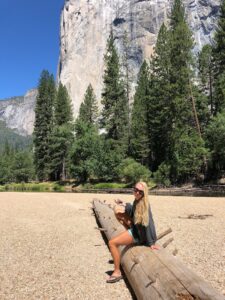
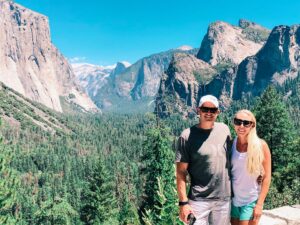
From there, the road wound its way down into the famous Yosemite Valley. Nothing quite prepares you for the sight of El Capitan rising out of the ground, a sheer granite wall that commands attention. I pulled over at nearly every turnout, craning my neck to take it all in. Eventually, I made my way to the Visitor Center, where exhibits on the park’s history and geology gave a deeper sense of place to the grandeur around me.
To the Southern Gate: The Redwoods of Yosemite
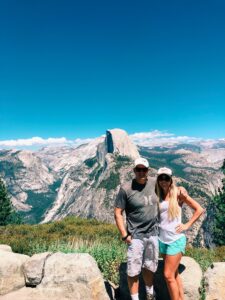
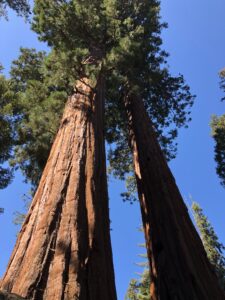
After exploring the valley floor, I drove out towards the Mariposa Sequoias, making a stop to walk to the view point of Half Dome. The views are breathe taking all amongst Yosemite, and I’ll admit it got me a bit emotional standing at the top of the mountains looking at the vast horizon. When we got to the Marioposa grove we did a small hike to see the trees. 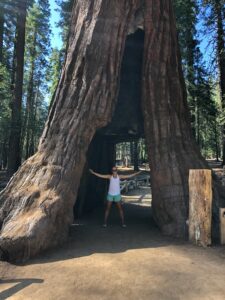 Standing among trees that have been alive for thousands of years is humbling — they stretch so tall and wide that you can’t help but feel small in the best possible way.
Camping by the Northwest Entrance & Hiking May Lake
That night, I camped near Yosemite’s northwest entrance, saving my energy for an early morning hike. The trail to May Lake was short but rewarding. It climbed through forest and granite slopes before opening up to a pristine alpine lake tucked beneath the rocky shoulders of Mount Hoffmann. The air was cool and quiet, the kind of spot where you just sit, breathe, and feel lucky to be there.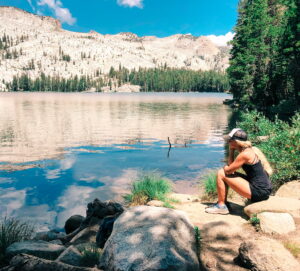
South to Kings Canyon and the Sequoias
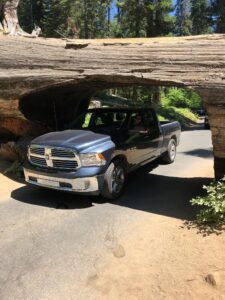
From Yosemite, we continued south toward Kings Canyon National Park and Sequoia National Park, two places that feel like cousins to Yosemite but with their own character. Kings Canyon offered dramatic valleys and rushing rivers, while Sequoia left me speechless with its ancient giants. Walking through the Giant Forest, seeing the General Sherman Tree (the largest tree on earth by volume), and touching the bark of living beings thousands of years old was the perfect finale to the trip. Words or pictures can’t describe how ginormous these trees actually are. I loved them. They are a must see! Some so big you can drive your truck through. (That is if you’re willing to wait in the line of cars to do it)
The Journey’s End
From there, I made my way back toward Southern California, the road winding me down out of the mountains. The trip had been a blur of landscapes — salt flats, alpine lakes, granite cliffs, redwood groves, and towering sequoias — each stop layering on its own sense of wonder.
What struck me most wasn’t just the beauty of each destination, but the way they connected. From the open desert of Utah to the deep forests of California, the drive tied it all together. And as I pulled into Southern California, tired but full of memories, I knew this was a road trip I’d carry with me for a long, long time.